


JK News Today
Jammu: In a notable international recognition, Dr. Sikander Pal Choudhary, Associate Professor, Department of Botany, University of Jammu, was invited as a Visiting Professor at the Henan University of Science and Technology (HUST), Luoyang, China, from February 6 to March 8, 2026.

HUST is a globally reputed institution known for its high-impact research. An invitation to Dr. Sikander was extended in recognition of his pioneering work on root system architecture (RSA) in major crops such as maize, pea, and tomato. At the University of Jammu, Dr. Choudhary leads the Plant Physiology Laboratory, where advanced research is underway using CRISPR-Cas9 technology to develop crop varieties resilient to salinity and low-fertiliser input conditions. The laboratory has also integrated machine learning into plant science research, with recent work on the Deep Learning–Crop Platform (DL-CRoP) published in the Research (Science Partner Journal).
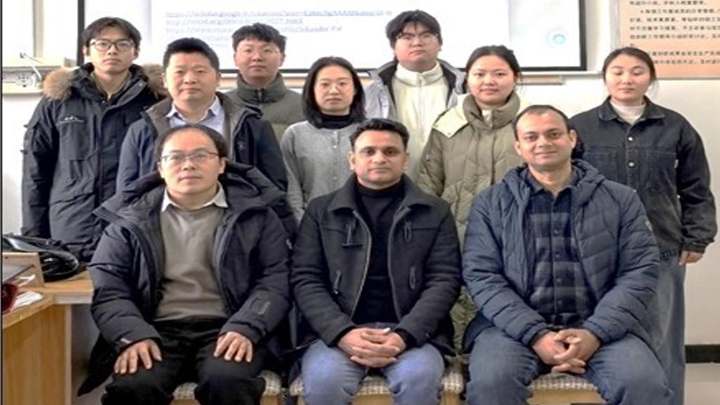
During his visit, Dr. Choudhary interacted with Prof. Shuang Chen, Lab head, faculty members, research scholars and students at the Division of Horticulture, HUST. These engagements explored new research directions in crop science, particularly in addressing climate change challenges and contributing to the United Nations Sustainable Development Goals (SDGs). A major outcome of the visit was the signing of a collaborative agreement between the Plant Physiology Laboratory, University of Jammu, and the Division of Horticulture, HUST.
This partnership is expected to evolve into a formal Memorandum of Understanding (MoU), strengthening long-term academic and research collaboration between the two institutions. The laboratory has made significant contributions in developing innovative strategies to enhance crop productivity through root phene modules and their integration, particularly for improving abiotic stress tolerance in crops. This HUST-sponsored visit has highlighted an excellent platform to exchange ideas and explore collaborative solutions for sustainable agriculture under changing climatic conditions.
The interaction with researchers at HUST will further strengthen our efforts in integrating advanced technologies like machine learning and genome editing in crop improvement. Such international collaborations are vital for advancing scientific innovation and addressing global agricultural challenges.
