


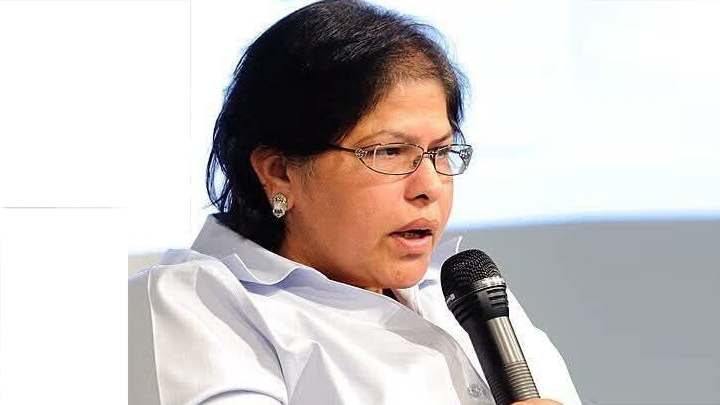
Pakistan has shifted from hybrid civilian-military rule to what leading expert Dr Ayesha Siddiqa describes as “constitutional militarism” — a system in which the army maintains full control over the state through parliament and constitutional mechanisms, rather than through overt martial law.
In a frank interview on the Cineink podcast London Vārta with broadcaster Pervaiz Alam, the Senior Fellow at King’s College London explained:

“When Imran Khan was removed, that was the last hybrid government. What we have now is constitutional military rule.”
Dr Siddiqa noted that General Asim Munir did not impose martial law. Instead, power shifted through a parliamentary manoeuvre that brought down Imran Khan’s government.
“There is parliament, but the military has control over everything, every sector. This is Pakistan,” she said.
She highlighted key legislative tools enabling this system, including the 27th Amendment, which extended the tenures of service chiefs, along with other changes that grant military leaders exemptions similar to those Donald Trump secured for himself and his family — effectively shielding them from accountability.
New rules allow critics on social media or in traditional media to be jailed, while proposals are under discussion to seize assets in Pakistan of those living abroad who criticise state institutions.
“Parliament has itself lifted this entire system onto its own shoulders,” Dr Siddiqa observed.
“That is why I call it constitutional militarism, in which the military rules under a constitutional cover.”
This is an excerpt from a wide-ranging interview covering Pakistan’s role in the US-Iran crisis, its economy, and unrest in Pak-administered Kashmir. Full interview link in the comments box.
What are your thoughts on this characterisation of Pakistan’s current political system?
