

JK News Today
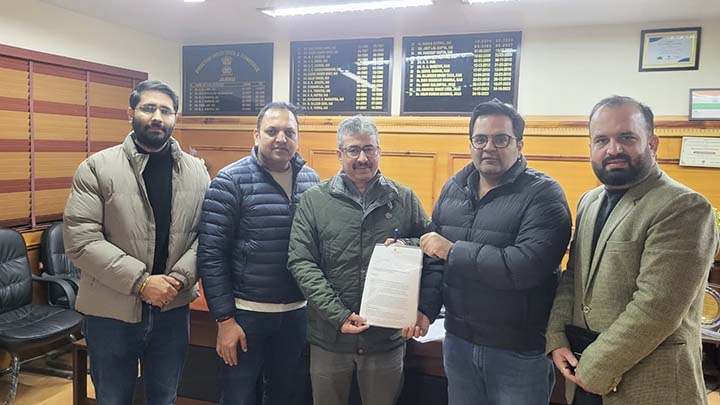
Jammu, January 9: A delegation of the Associated Chambers of Commerce & Industry of India (ASSOCHAM), Jammu & Kashmir Council, led by Mr. Manik Batra, Chairman, and Mr. Bhupesh Gupta, Co-Chairman, today met Dr. Arun Manhas, Director, Industries & Commerce, Jammu & Kashmir, and submitted a detailed representation seeking strengthening and effective implementation of the Solar Policy for the industrial sector in the Union Territory.
CA Aditya Suri and Mr. Amit Khajuria, Assistant Director, ASSOCHAM J&K Council, were also present during the meeting.
During the interaction, the ASSOCHAM delegation highlighted that Jammu & Kashmir has immense potential for rooftop and captive solar installations in industrial areas. However, despite the notified Solar Policy, industrial adoption has remained limited due to procedural delays, lack of bankable incentives, uncertainty in grid connectivity, and limited inter-departmental coordination. High power tariffs, particularly impacting MSMEs and energy-intensive industries, continue to affect industrial competitiveness in the region.
The delegation emphasized the need to transition from an intent-based policy framework to an implementation-driven, industry-friendly solar ecosystem aligned with national renewable energy objectives. It was pointed out that industries require predictable timelines, simplified approval mechanisms, stable regulatory charges, and financially viable models to adopt solar energy at scale. Region-specific challenges such as snow-bound conditions, winter generation constraints, and storage requirements were also highlighted as critical factors requiring tailored policy interventions.
ASSOCHAM J&K Council specifically proposed provisions related to net metering and open access, including allowing net metering up to 100 percent of sanctioned load, permitting energy banking for a minimum period of 12 months, fixation of open access and wheeling charges for 5 to 10 years, and reduction or waiver of cross-subsidy surcharge for captive industrial solar projects.
The representation also suggested the introduction of a “Made with Green Power – J&K” certification, offering branding advantages and preferential treatment in government procurement for certified industrial units, thereby promoting green manufacturing and sustainability.

Outlining the objectives of the proposed framework, ASSOCHAM stressed the need to accelerate solar adoption by industries, reduce electricity costs, encourage private and third-party investment, support MSMEs through targeted incentives, ensure DISCOM sustainability, and position Jammu & Kashmir as a green industrial destination.
The delegation further proposed a clear implementation timeline, including policy notification within 30 days of approval, operationalisation of a single-window clearance system within 60 days, and phased development of solar-ready industrial estates over 12 to 18 months.
Mr. Manik Batra, Chairman, ASSOCHAM J&K Council, reiterated ASSOCHAM’s commitment to work closely with the Government and all stakeholders to facilitate consultations and support effective execution of the strengthened Solar Policy for the industrial sector in Jammu & Kashmir.
