



Editor JK News Today
Commentary
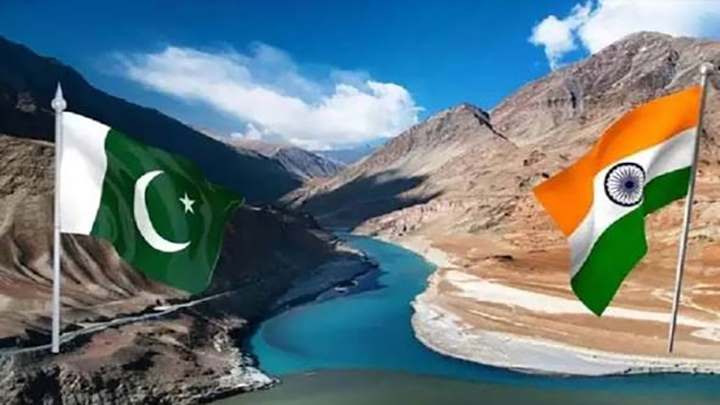
It was quite audacious on the part of Pakistan to have accused India of unilaterally altering the terms of the Indus Waters Treaty and depriving it of its due share of water , thus threatening the water security of millions of its people . Pakistan cited the UN Charter and the international laws on the water distribution cooperation among nations to claim that it deserved its share as defined in the 1960 World -Bank -brokered Treaty , was willing to settle all the issues within the framework of the Treaty .
This offensive against India was launched at a specifically designed seminar in Brussels , organized by Pakistan Embassy in Belgium, Luxembourg , on Thursday, June 18, 2026 . The plot was clear to use a platform in Europe as Brussels also serves as capital of the European Union – to showcase India seeking to weaponize waters of the six rivers covered under the Treaty . The seminar titled, “Transboundary water Resources: A Weaponized Global Common,” underlined the exact design on which Pakistan was working . Apart from the Pakistan embassy , the European Union ,NATO and the Centre for European Policy Studies ( CEPS) were listed as collaborators .
Pakistan used this platform to present itself as a victim in pain because of India’s actions on the treaty- India suspended the treaty on April 23, 2025 , a day after the Pahalgam massacre in which 26 civilians, 25 of them Hindu tourists , were killed by Pakistani terrorists . India had made it clear that it won’t revoke the suspension until it curbs cross-border terrorism .
Instead of telling the world that it were its own acts of terror in Pahalgam on April 22, 2025, and also before that in Jammu and Kashmir and elsewhere in the country ,it made an all-out effort to paint Delhi black on the issue, claiming that India had started weaponizing water to punish millions of Pakistanis dependent upon the waters running in rivers and canals and quenching their thirst until recently .At no stage, however , it mentioned that what it had done and why India was forced to take this action , despite the well -known fact that the Treaty had survived wars and several other challenges teetering India-Pakistan relations.
Pakistan’s reasons for choosing Europe to organize the seminar in which the IWT was brought into sharper focus , are obvious . Islamabad has gained new recognition after it played a role as a mediator between the US-Iran talks , resulting in the signing of the Memorandum of Understanding between the two countries on Wednesday, June 17, 2026. The signing of a MoU which aims at uprooting the underlying causes of the conflict that rattled the world and brought it face -to-face with a severe energy crisis , has also won Pakistan appreciation from several countries, including some in Europe . Pakistan is seeking to utilize this newly -gained global attention to push forward its anti-India agenda . The suspension of the IWT is being weaponized by it .

n Brussels was organized by the Embassy of Pakistan in Belgium , Luxembourg, the European Union and NATO in collaboration with the Centre for European Policy Studies ( CEPS), on June 18, 2026, was designed to denounce India for the steps it had taken vis-à-vis the treaty . The seminar highlighted all the pain ad concerns of Pakistan , but it completely hid what it has been doing to India all along before and after the Treaty was signed . That is its direct wars , proxy war and direct import of terrorism to bleed India via Jammu and Kashmir.
Pakistan is making all attempts to defame India at international forums , charging it with blocking its rights to waters that the Treaty granted it in 1960 . It keeps on mentioning that the Treaty had withstood three Indo-Pak wars and several other challenges between the two countries . That part is true. Successive governments in Delhi ignored Pakistan’s acts of mounting terror attacks across the country, and particularly in Jammu and Kashmir . They did not want to disturb the applecart and invite international criticism.
These governments kept on asking Pakistan to stop cross-border terrorism , but at the same time kept doors for bilateral talks open in the vain hope that Islamabad will learn and reciprocate India’s goodwill gestures . That did not happen because Islamabad always wanted to have its cake and eat it too . This duplicity worked as Delhi wanted to behave as benevolent elder bother . Gradually , cross-border terrorism started eating away at the vitals of India’s national security , both on the borders and in the hinterland .
Prime Minister Narendra Modi had made it clear that while India wanted good neighbourly relations with Pakistan and comprehensive talks were the way out , it would not come at the cost of its sovereignty territorial integrity , and its people – the natural owners of the water resources. Despite the fact that previous governments allowed the waters to flow unhindered , they were aware that the Treaty was unfair to the country and its people . They did nothing because they had not. Created alternatives to store the waters and use them for the benefit of the countrymen.
It is only after the Modi government arrived on the scene that it thought of and acted on unburdening the unbearable burden of the outdated treaty accumulated over the decades.
Pakistan was relentlessly pursuing its anti-India agenda through terrorism , and it had to be put to an end . That is what the Modi government did . Now , alternatives are in progress to divert the waters for farmers and others in the states where this water is required more than anywhere else. The days of blood-spilling terrorism on Indian soil rewarded by unhindered flow of waters are over.
Pakistan is feeling the pinch . Hence this propaganda.
