


Editor JK News Today
News Analysis
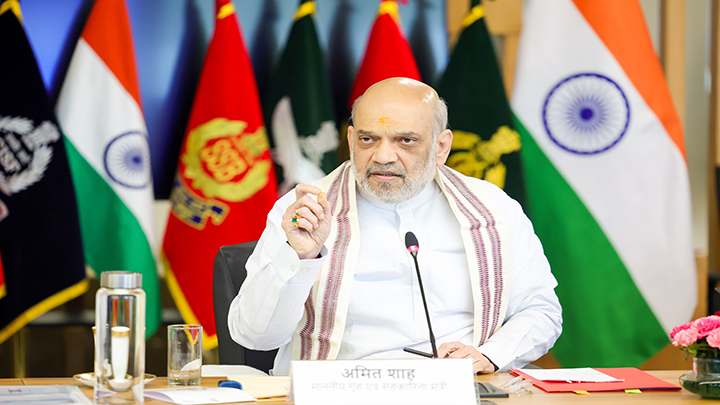
“The Modi government has dismantled the ISI-backed terror outfit, the Shahzad Bhatti Network, ahead of Independence Day, thwarting its plans for subversive attacks by arresting more than 200 operatives. Indian security forces ripped apart the network through coordinated operations across 14 states, demonstrating India’s zero-tolerance policy toward terrorism. Substantial recoveries—including IEDs, grenades bearing Pakistan Ordnance Factory markings, pistols, live cartridges, and CCTV cameras used for espionage—were made from the ISI-funded group. The network was involved in several terrorist activities,” read a post by Home Minister Amit Shah on Monday, August 17, 2026.
The Home Minister has done a great service to the nation by bringing these facts to light. This disclosure ensures the public understands that infiltration is no longer confined to physical borders or cyberspace; terrorists and their handlers in Pakistan are deploying far more diverse tactics. By sharing graphic details, the post successfully brought every critical fact to public attention.
The primary objective was to expose Pakistan’s ongoing machinations and its failure to learn from the humiliating defeat it suffered during Operation Sindoor in May 2025. That operation—now detailed in a documentary for global and domestic audiences—was launched to avenge the Pahalgam massacre of April 22, 2025, in which 26 civilians, mostly Indian tourists, were killed. This decisive action should have forced Pakistan to retreat from cross-border terrorism out of fear of the swift retribution it would face.
Instead of adapting to these altered realities, Islamabad persisted with its malicious efforts to destabilize India. This time, the conspiracy was planned on a far grander scale across 14 states, including the national capital, Delhi, where Prime Minister Narendra Modi presided over the main Independence Day function and addressed the nation from the ramparts of the Red Fort
It is worth recalling that in November of last year, a car bomb exploded in the neighborhood of the Red Fort—an incident orchestrated by Pakistan-instructed terrorists. This could easily have been a repeat of the multiple blasts that rocked various Indian cities during the pre-Modi era.
True service to the nation in the fight against terrorism extends far beyond merely punishing perpetrators after innocent lives have been tragically lost. Preventing such attacks and foiling adversary plots is a much greater service; it saves lives and preserves the resolute image of a country standing firm against terror. At the same time, making the details of these foiled designs public goes a long way toward alerting the public to future threats, while sending a stern warning to terrorists and their backers about the consequences of their actions.
The revelations made by the Home Minister regarding this case were startling, laying bare how Pakistan-based terror networks work 24/7 to bleed India. It is harrowing to imagine the scale of devastation had security agencies not intervened. This could have mirrored the horrors of 26/11 or multiple Pahalgam-style attacks unfolding simultaneously on Independence Day—an iconic and sacrosanct occasion in India’s history.
It is evident that Pakistan has continuously plotted such designs, particularly during the Modi era and under the internal security leadership of Home Minister Amit Shah. Prior to the Pahalgam savagery, Pakistan executed the Uri garrison attack in September 2016, which was met with surgical strikes across the Line of Control (LoC), and the Pulwama bombing of February 14, 2019, which was avenged by aerial strikes deep inside Balakot, Khyber Pakhtunkhwa. By then, India had adopted a clear, zero-tolerance strategy toward every single act of terror. When the Pahalgam attack occurred in April 2025, it was answered by a sweeping military counter-offensive spanning from mainland Pakistan to the Pakistan-occupied territories of Jammu and Kashmir.
Examining the Shahzad Bhatti Network (SBN) helps illustrate the severe dimensions of the recent plot and why its preemption averted a major catastrophe. SBN is a Pakistan-based, ISI-backed terror syndicate linked to grenade, IED, and petrol bomb attacks, as well as targeted killings across India. The network has also funnelled money to local conduits to conduct reconnaissance on police, defense, and religious sites, and to install CCTV cameras for espionage.
To counter SBN-linked disruptions planned around Independence Day, a coordinated multi-state operation was carried out on August 12 using real-time intelligence sharing with state police forces. This led to 253 detentions across 14 states—including Uttar Pradesh (62), Haryana (52), Delhi (51), Punjab (44), Rajasthan (15), Maharashtra (8), Uttarakhand (5), Karnataka, Gujarat, and Bihar (3 each), and Telangana, Himachal Pradesh, J&K, and Kerala (2 each)—with fresh FIRs registered in Delhi and Karnataka. Cumulatively, over 80 FIRs and more than 200 arrests have been recorded against SBN under the UAPA, BNS, Arms Act, NDPS Act, and Explosive Substances Act. Recoveries included IEDs, grenades bearing Pakistan Ordnance Factory markings, pistols, live cartridges, and espionage CCTVs, confirming the network’s direct cross-border ties.
These findings expose the sinister designs of Pakistan’s Inter-Services Intelligence (ISI) to target India on its Independence Day. More importantly, they underscore the safety afforded to citizens under the Modi government, which maintains an unwavering zero-tolerance policy toward terrorism. This doctrine, which now resonates globally, was first forged in the crucible of Jammu and Kashmir.
When Prime Minister Narendra Modi assumed office in May 2014, Kashmir was gripped by Pakistan-sponsored violence. The threat was multi-dimensional: alongside guns and grenades, street stone-pelting had become normalized. The situation grew so perilous that security forces struggled to neutralize every emerging threat. Then came Operation Sindoor in response to the Pahalgam attack, which dealt Pakistan a decisive defeat.
While the latest thwarted plot proves the security threat is far from over, a crucial difference remains. By making the details public, the Home Minister has taken a giant step in educating the public on these ongoing dangers and demonstrating how citizens can remain vigilant against threats aimed at destabilizing the nation. Pakistan’s footprint is unmistakable. As with past incidents, Islamabad has predictably dismissed the latest revelations as a “baseless charge.” Yet, despite routine denials, the stark reality remains manifest in broad daylight.