


How visionary leadership is reshaping connectivity, water security, energy infrastructure and economic opportunities in Ladakh
Ladakh is entering a new era of development. From improved connectivity and modern infrastructure to water conservation and power generation, the region is witnessing a renewed focus on addressing challenges that have affected its people for decades. At the centre of this transformation is the leadership of Hon’ble Prime Minister Shri Narendra Modi, whose vision of development for remote and strategically important regions has placed Ladakh firmly on the national development agenda.
The creation of the Union Territory of Ladakh in 2019 marked a significant turning point in the region’s administrative journey. Since then, infrastructure, connectivity and development have remained central to the aspirations of its people. The real significance of this transformation lies not merely in the announcement of projects, but in their potential to improve lives, strengthen livelihoods and open new economic opportunities.

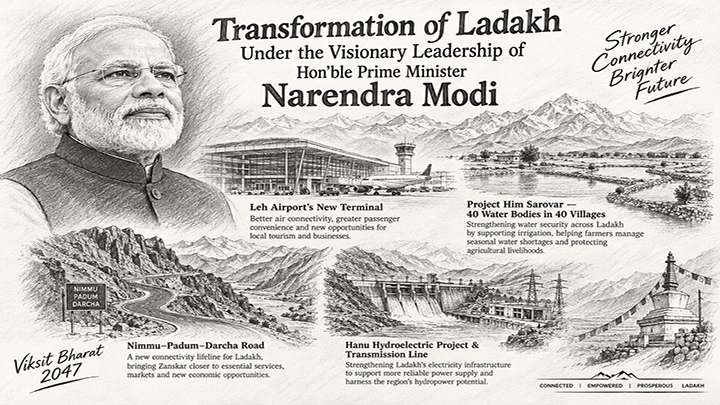
Leh Airport: A Gateway to Growth
For Ladakh, air connectivity is a lifeline. The development of the new terminal at Leh Airport is an important step towards improving passenger convenience and strengthening the region’s connection with the rest of India.
Better airport infrastructure can support tourism, facilitate business travel and improve access for patients and other travellers. It can also create opportunities for local hotels, homestays, transport operators, artisans and small businesses.
As Ladakh continues to attract visitors from across India and abroad, improved aviation infrastructure will be essential to ensuring that tourism contributes more meaningfully to the local economy.
Project Him Sarovar: Water Security for Ladakh’s Future
For Ladakh’s farming communities, water is the foundation of life and livelihood. The region’s dependence on seasonal water sources makes conservation and efficient water management essential.
Project Him Sarovar, envisaging 40 water bodies across 40 villages, reflects the importance of strengthening water security at the grassroots level.
By supporting irrigation and helping communities manage seasonal water shortages, the initiative has the potential to strengthen agriculture and horticulture while protecting rural livelihoods.
At a time when Himalayan communities are increasingly concerned about changing climatic conditions and the reliability of traditional water sources, investment in water conservation is an investment in Ladakh’s future.
The priority must now be to ensure proper implementation, regular maintenance and community participation so that these water bodies deliver lasting benefits to farmers.
Nimmu–Padum–Darcha Road: Bringing Zanskar Closer to Opportunity
For generations, difficult terrain and limited connectivity have posed serious challenges to the people of Zanskar. The Nimmu–Padum–Darcha Road represents an important step towards overcoming these geographical barriers.
By providing an alternative road connection between Ladakh and Himachal Pradesh, the route can improve access to essential services, strengthen regional connectivity and open new avenues for trade and tourism.
For local farmers, entrepreneurs and tourism operators, improved connectivity can mean easier movement of goods, access to wider markets and new opportunities to generate income.
The road also has strategic importance, reinforcing the need for dependable infrastructure in Ladakh’s border regions.
The development of Zanskar must now build upon this connectivity by investing in local enterprises, sustainable tourism, agricultural value addition and opportunities for the younger generation.
Hanu Hydroelectric Project: Powering a New Ladakh
Reliable electricity is indispensable for modern development. The Hanu Hydroelectric Project and its associated transmission line represent an important part of the effort to strengthen Ladakh’s power infrastructure and harness its hydropower potential.
A stronger electricity network can support households, public institutions, tourism establishments and emerging businesses. It can also create better conditions for food processing and other small-scale industries that add value to Ladakh’s local resources.
For a region seeking to diversify its economy beyond tourism and government employment, dependable energy infrastructure is essential.
The larger objective should be to ensure that improved power infrastructure translates into better services, stronger enterprises and more employment opportunities for local youth.
Development Must Reach the Last Village
The true measure of leadership is the difference it makes in the lives of ordinary people.
A road matters when it connects a remote village to a hospital or market. A water body matters when it helps a farmer save a crop. An airport matters when it improves access and supports local employment. A power project matters when it brings reliable electricity to homes and businesses.
These are the outcomes that will define the success of Ladakh’s development journey.
The region has immense untapped potential in seabuckthorn, apricots, horticulture, renewable energy, handicrafts, tourism and traditional knowledge. With better infrastructure and appropriate policy support, these sectors can become engines of local economic growth.
Ladakh’s young people must be given the opportunity to become entrepreneurs, innovators and job creators in their own homeland. Development should strengthen local businesses, encourage investment and ensure that the economic benefits of the region’s natural and cultural wealth reach its people.
A Vision Beyond Infrastructure
Prime Minister Narendra Modi’s vision of a developed India by 2047 places responsibility on every region to realise its potential. For Ladakh, this means building an economy that is connected, resilient and environmentally responsible.
The region’s unique ecology demands careful planning. Infrastructure development must go hand in hand with water conservation, responsible tourism, protection of fragile mountain ecosystems and the preservation of Ladakh’s rich cultural heritage.
Equally important is the need for transparent implementation, effective coordination between departments and meaningful participation by local communities.
Political leadership must ultimately be judged by tangible results: better livelihoods, stronger public services, economic opportunity and confidence among the people.
The Road Ahead
Ladakh’s transformation is a continuing journey. The development of Leh Airport, Project Him Sarovar, the Nimmu–Padum–Darcha Road and the Hanu Hydroelectric Project represents different but interconnected dimensions of regional progress.
Together, these initiatives highlight the importance of connectivity, water security and energy infrastructure in building a stronger future for Ladakh.
The challenge now is to convert infrastructure into prosperity, investment into employment and development initiatives into measurable improvements in people’s lives.
Ladakh’s story must be one of moving from geographical isolation towards greater connectivity, from economic limitations towards entrepreneurship, and from vulnerability towards resilience.
Under the leadership of Hon’ble Prime Minister Narendra Modi, Ladakh has an opportunity to strengthen its place in India’s development journey while preserving the identity, culture and natural heritage that make this Himalayan region unique.
The ultimate vision must be a Ladakh that is modern yet rooted in tradition, economically self-reliant yet environmentally responsible, and connected to the nation while ensuring that its own people remain the primary beneficiaries of progress.
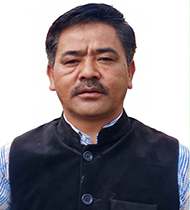
(Dorjey Angchuk State Vice President BJP UT Ladakh)
