


JK News Today
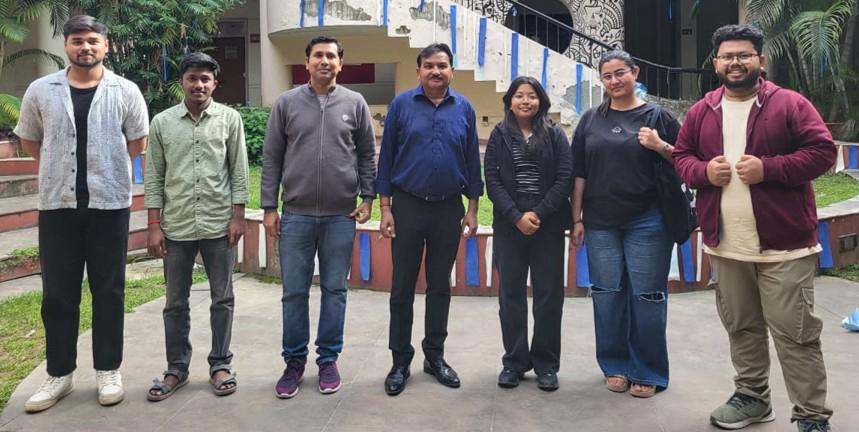
Katra, March 25: Student interns from Shri Mata Vaishno Devi University (SMVDU), appointed under an Indian Knowledge Systems (IKS) project, recently conducted extensive site visits to document traditional water systems, particularly baolis, in the Trikuta (Shivalik) Hills. The initiative is part of the research project titled “Vanishing Architecture and Spatial Planning Wisdom for Traditional Sustainable Water Management in Trikuta Hills, Jammu and Kashmir: A Study of its Contemporary Relevance,” funded by the IKS Division, Ministry of Education, Government of India, under the IKS Institutional Internship Program–2025. The fieldwork was led by Ar. Vinod Kumar, Assistant Professor, School of Architecture & Landscape Design, SMVDU, and Principal Investigator of the project. The student team—Harsha, Aman, Aditya, Partha, Variga, and Mamita—actively participated in site documentation, mapping, and analysis of selected baolis across the region. A key highlight of the study was the involvement of Mr. Anil Paba, a state government awardee, social activist for cultural and heritage conservation, and archaeologist. As an external expert, he accompanied the team during site visits, providing valuable insights into the historical, cultural, and architectural significance of the baolis, and reviewed the project at various stages. The team documented important sites including Billan, Devika, Panchvati (Thanda Paddar), Charai Muttal, and Londana baolis. Observations revealed that these structures, once central to community life and sustainable water management, are now facing challenges such as structural deterioration, declining water quality, environmental degradation, and loss of cultural relevance. The initiative provided students with hands-on field experience and highlights the importance of conserving indigenous water systems. It aims to support the integration of traditional knowledge into contemporary planning and sustainable development practices.
