



It has been over a year since a new government came to power in the Union Territory of Jammu and Kashmir. Eight months after the brutal Pahalgam massacre that led to restrictions and a downslide in tourism, the region seems to be limping back to normalcy. Tourist inflows, which touched a record 24 million in 2024 and showed a similar surge in the early months of 2025, crossing 9 million in the first four months, dipped substantially after the terror incident in April. The government decided to shut 48 important tourist spots for several weeks after Home Minister Amit Shah, during his visit to Pahalgam on April 23, ordered a complete security review of those sites.
In the last couple of years, until the Pahalgam incident, hotels, resorts and houseboats often saw 100 per cent occupancy with months of advance reservations. An acute shortage of rooms was experienced during peak tourist season. That kind of rush is yet to come back, although hotels in Srinagar are reporting 50-60 per cent occupancy in December.

Since the abrogation of Article 370 in August 2019, there has been a change in mood at the grassroots in the Valley. The greatest support for Prime Minister Narendra Modi’s government in Delhi came from ordinary Kashmiris, who refused to be swayed by emotions and separatist rhetoric. It appeared as though, having lived under the Article 370 regime for several decades, they wanted to try living under “no 370”.
In the immediate aftermath of the abrogation, when a large number of political leaders in the Kashmir Valley were placed under preventive detention, there was no hue and cry. A year after the abrogation, when some members of the Abdullah family tried to organise a protest from Lal Chowk, only a handful of people turned up. Such incidents in the last few years make it clear that the people of the Valley seem convinced about their new identity under the Indian Constitution and are willing to be partners in Delhi’s development-centric governance.
There is zero appetite for terrorism and separatism in the Valley now. Avowed separatist bodies like the Jamaat and religious leaders often seen as toeing soft separatism, like Mirwaiz Moulvi Umar Farooq, have considerably moderated their tone and tenor. A major section of the Jamaat plunged into electoral politics last year, affirming its loyalty to the Indian Constitution. Mirwaiz, an influential figure in moulding public opinion in Kashmir, consistently maintained his position against terror and emphasised the need for greater dialogue to bridge “dil aur Dilli ki doori”.
The Pahalgam incident saw a large number of ordinary Kashmiris coming out openly, not only in opposing terrorism but also taking up cudgels against Pakistan. It is this popular sentiment that forced leaders like Mirwaiz to tone down their old rhetoric about tripartite talks between India, Pakistan and Kashmir and shift to issues like waste management, public hygiene, power shortages and water scarcity. By travelling to Delhi to attend parliamentary panel meetings, Mirwaiz gave a clear indication of his willingness to work with the government.
The memorandum submitted by the delegation of MPs from the Valley, who met the Union Home Minister earlier this week, is an indication of the new priorities and aspirations. It urged Shah to initiate “clear, concrete, and time-bound” steps for early restoration of full statehood, in keeping with “constitutional principles, judicial observations, and the assurances already given at the highest level”.
Delhi must seize the opportunity and enhance direct engagement with various stakeholders in the state for a political dialogue. In Kashmir, besides prominent parties like the NC, PDP, BJP and Congress, there are several important players, political and non-political, who wield considerable influence over different sections of society. Most of them will be willing, if not eager, to engage with Delhi. Such an engagement will surely yield great dividends and help consolidate the goodwill achieved through good governance over the last six years. Unfortunately, besides visits by the Prime Minister, the Home Minister and a couple of cabinet ministers in the first half of the year, there has not been much political engagement with Kashmir in the last several months.
Some opposition for the sake of politics notwithstanding, the sentiment in the Valley was well captured by the MPs’ memorandum which said, “a Kashmiri”, besides being a human being, is “an Indian”.
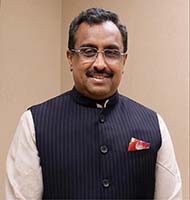
The writer, president, India Foundation, is with the Bharatiya Janata Party
