


Pachen Charasa
In the harsh yet breathtaking landscape of Ladakh, where every sapling is a victory against nature’s extremes, a remarkable environmental movement is quietly taking shape. While many chase social media fame with cameras and catchy slogans, there are a few who are building a legacy that future generations will inherit.

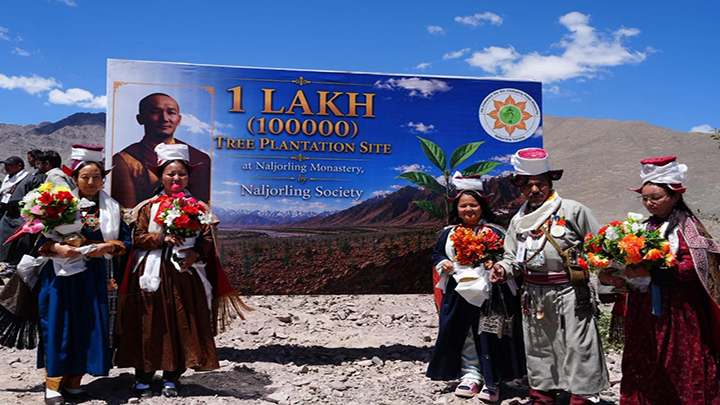
One such inspiring example is Palga Rinpoche, whose vision of establishing a One Lakh (100,000) Tree Plantation Site at Naljorling Monastery stands as one of the most ambitious ecological initiatives in the region.
The initiative is more than a plantation drive—it is a long-term commitment to restoring Ladakh’s fragile ecosystem. Growing trees in the cold desert requires years of planning, water conservation, community participation, and unwavering dedication. Every tree planted is a statement of resilience against climate change and desertification.
The project also reflects the centuries-old Buddhist philosophy of living in harmony with nature, transforming spiritual values into practical environmental action.
Beyond Plantation: Creating a Living Legacy
Unlike symbolic plantation campaigns that disappear after a few photo opportunities, the Naljorling initiative aims to create a sustainable green landscape that will benefit generations.
The plantation has the potential to:
- Improve local biodiversity.
- Reduce soil erosion.
- Enhance carbon sequestration.
- Create micro-climatic improvements.
- Inspire environmental stewardship among youth.
- Demonstrate that even Ladakh’s cold desert can be transformed through patience and perseverance.
Projects of this scale require not just funding but years of continuous care—watering, fencing, monitoring, and protecting every sapling from Ladakh’s harsh climate.
The Difference Between Groundwork and Online Popularity
The rise of environmental awareness on digital platforms has undoubtedly helped bring attention to ecological issues. However, there is an important distinction between raising awareness and creating measurable environmental impact.
In recent years, Ladakh has witnessed the emergence of several content creators and YouTubers who have gained significant visibility by speaking about the environment. While public communication has value, visibility should not become a substitute for verifiable, long-term work on the ground.
In a strategically important border region like Ladakh, environmental leadership should ideally be judged by sustained contributions—such as afforestation, watershed restoration, scientific collaboration, community mobilization, or other documented conservation efforts—rather than by online reach alone.
Recognition is most meaningful when it reflects tangible outcomes and enduring commitment, not simply the size of an audience.
Unsung Heroes Deserve Greater Recognition
Ladakh has never lacked environmental pioneers.
Its history is filled with monks, villagers, engineers, scientists, volunteers, and local organizations who have spent decades improving water security, restoring landscapes, and protecting fragile ecosystems without seeking the spotlight.
Palga Rinpoche’s One Lakh Tree Plantation is a reminder that meaningful environmental change is measured not in views or subscribers, but in trees that survive, ecosystems that recover, and communities that benefit.
A Model Worth Replicating
As climate challenges intensify across the Himalayas, initiatives like the Naljorling plantation deserve national attention and institutional support.
If successfully nurtured, this project could become a model for other monasteries, schools, NGOs, and village communities across Ladakh—demonstrating that ecological restoration is possible even in one of the world’s most challenging environments.
History rarely remembers those who merely spoke about change.
It remembers those who planted forests, restored landscapes, and left behind living monuments.
Palga Rinpoche’s vision is not simply about planting one lakh trees. It is about planting hope, responsibility, and a greener future for Ladakh.
