


Pachen Charasa
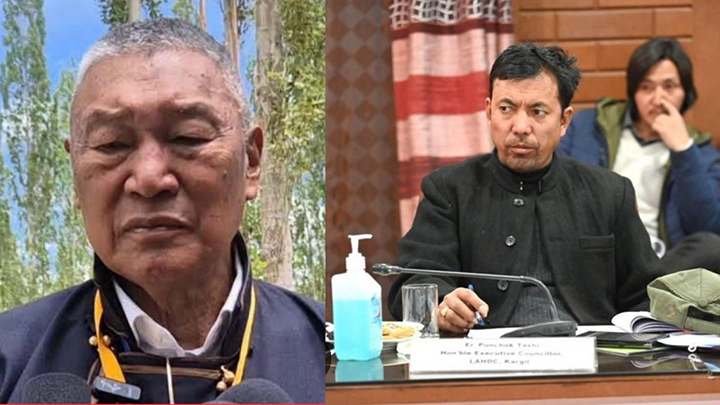
The letter submitted by Executive Councillor Er. Punchok Tashi to Union Home Minister Amit Shah seeking a separate Autonomous Development Council (ADC) for the newly created Zanskar district has once again exposed a deeper crisis in Ladakh’s political leadership. More than a demand for administrative restructuring, the letter reflects a growing sentiment that the voices of remote regions are increasingly being sidelined in favour of centralized decision-making dominated by a handful of leaders.

For years, the Leh Apex Body (LAB) and the Kargil Democratic Alliance (KDA) have projected themselves as the unified voice of Ladakh. However, the question that now deserves serious attention is whether these platforms genuinely represent every region of Ladakh—or merely the interests of a select leadership concentrated in Leh and Kargil headquarters.
The demand raised by Punchok Tashi is not a new one. It is rooted in the unique geographical realities of Zanskar, a region that remains cut off for months due to harsh winters and faces development challenges distinct from the rest of Ladakh. His appeal argues that a separate Autonomous Development Council and stronger legislative representation are necessary to ensure decentralized governance and equitable development.
The issue becomes politically significant because it raises doubts over how effectively the Apex Body has represented the aspirations of all regions while negotiating with the Government of India.
One of the sharpest criticisms emerging from this episode concerns the leadership of Chering Dorjay Lakrook, who serves both as President of the Ladakh Buddhist Association (LBA) and Chairman of the Leh Apex Body. Holding two of the most influential positions in Ladakh’s public life places upon him the responsibility of ensuring that every Buddhist-majority region and every community within Ladakh is heard during negotiations.
Instead, critics argue that his leadership has increasingly become centralized, with important decisions being taken without broad consultations across remote regions such as Zanskar, Nubra, Changthang, Sham and other far-flung areas. The perception that negotiations are driven by a limited circle rather than through inclusive consensus has weakened public confidence in the Apex Body’s claim of representing all sections of Ladakh.
The latest appeal from Zanskar reinforces the concern that many regional aspirations remain outside the Apex Body’s negotiating priorities. If a newly created district must directly petition New Delhi for its own governance structure, it naturally raises questions about whether existing representative mechanisms are adequately reflecting the diversity of Ladakh’s needs.
Critics also argue that Lakrook’s dual role—as both LBA President and Apex Body Chairman—demands political neutrality and a commitment to safeguarding the interests of Buddhists across the entire Union Territory. They contend that any perception of political ambition or concentration on high-profile negotiations should never come at the cost of addressing the practical governance concerns of people living in remote and geographically isolated regions.
Leadership is ultimately measured not by the number of meetings held with the Centre, but by the extent to which every village, valley and district feels represented. A representative body loses credibility if sections of the population increasingly believe that they must independently raise their concerns because their voices are absent from the common agenda.
The demand from Zanskar should therefore serve as a wake-up call rather than merely another memorandum. It highlights the urgent need for a more inclusive framework in which every region—regardless of geography, population or political influence—has a meaningful role in shaping Ladakh’s future.
As discussions on Ladakh’s constitutional and administrative future continue, the credibility of any representative platform will depend on its ability to listen beyond its immediate leadership. Genuine representation cannot be selective; it must embrace the aspirations of every corner of Ladakh. Without that inclusiveness, the claim of speaking for all of Ladakh risks becoming increasingly difficult to sustain.
