


Editor JK News Today
Commentary
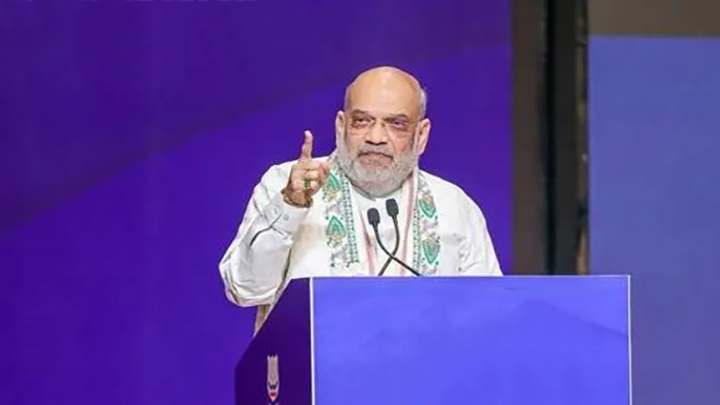
Union Home Minister Amit Shah’s one-day visit to Punjab on Tuesday, October 20, 2026, carries deep internal and international weight, marked by his pledge to eradicate the state’s drug menace by 2029. Coming from a land scarred by addiction and endless family grief, his message highlights a persistent crisis. Drugs continue to ravage a state once celebrated for its rich culture and agricultural strength.
During his visit, Amit Shah took it upon himself to meet the families of anti-drug crusaders who were murdered by those invested in protecting their drug-trafficking businesses. In Mari Panwan village in Batala, Gurdaspur, he met the family of Vikramjit Singh. In Mansa, he met the family of Parvinder Singh Jhota, another slain anti-drug crusader. Finally, in Dirba, Sangrur, he shared the pain of the family of Gulzar Singh, who tragically committed suicide following alleged persistent harassment by a state minister.
In the national context, Punjab represents much more than a mere province. It is the cradle of the Green Revolution that transformed the nation, earning it the nickname “the breadbasket of India.” It is a state where entrepreneurship is second nature, and its people have established a powerful global presence. The nation has incredibly high stakes in Punjab. This was demonstrated in full measure when the country stood as one to eliminate the menace of terrorism in the 1980s and restore peace—a victory achieved through the countless sacrifices of security forces.
However, those sacrifices are now being undermined by rampant drug abuse. What began as cross-border drug smuggling has evolved into a domestic crisis, transforming the state into a hub for “Chitta” (white powder). Because this agriculture-rich state wields immense regional influence, whatever happens here inevitably spills over into neighboring states like Himachal Pradesh, Haryana, Delhi, and Jammu & Kashmir. While Punjab’s historical prosperity has enriched these economies through investment and tourism, its challenges now threaten them. This interconnectedness underscores the urgent importance of saving Punjab from all evils, with drug abuse at the very top of the list. The Home Minister’s declaration that drug abuse must end by 2029 is a message directed not just at Punjab, but at all surrounding regions.
Jammu and Kashmir, sitting directly north of Punjab, is similarly plagued by drug abuse. Despite numerous regional campaigns, the problem persists. The Jammu and Kashmir Police, alongside other enforcement agencies, have worked relentlessly to arrest those involved in this illicit trade. Beyond making arrests, authorities are demolishing the infrastructural bases of drug traffickers to send a definitive message: drug networks will not be tolerated and must be completely wiped out. These campaigns have been driven by the Ministry of Home Affairs (MHA), led by Amit Shah, which directly supervises law and order in the Union Territory. Notably, Lieutenant Governor Manoj Sinha launched a 100-day anti-drug campaign in the UT on April 11, drawing massive participation from school children to civil society elders.
The commonalities between Punjab and J&K on this issue are striking. Both are border entities that have borne the brunt of Pakistan-sponsored terrorism and drug smuggling. Today, the adversarial neighbor is leveraging new technology, utilizing drones to drop arms, ammunition, drugs, and cash across the border. While the security situation in J&K has improved considerably—leaving terrorism breathing at a much slower pace than could have been imagined years ago—the territory’s quest for perfect peace continues. The primary catalyst for this transformation was the abrogation of Article 370 in August 2019. However, the rise of drug cartels threatens to trigger transnational terrorism, posing a widespread threat to both territories and their people.
This modern, sophisticated threat aligns with recent observations made by US Secretary of State Marco Rubio during a meeting of the Shield Heads of the Americas and Foreign Ministers on September 22, 2026. Rubio noted: “These are groups that, unlike in the past, are not simply drug cartels involved in illicit activity. These groups today are sophisticated. In many cases, they rival the state in terms of resources available to them, be they financial, military, or even in intelligence gathering. And the key part is that they are transnational.”
Both Jammu & Kashmir and Punjab have experienced this reality firsthand. Recognizing this, the Home Minister has reframed the vocabulary surrounding global drug routes. At a drug trafficking conference in July this year, Amit Shah stated: “The name ‘Golden Triangle’ may be applicable to the drug traffickers, but for those who are in favor of controlling drug usage, the appropriate terms are ‘Death Triangle’ and ‘Death Crescent.'” He emphasized that “this approach is not just symbolic; it represents the intensity and direction of our fight against drugs.”
His echoes of these remarks in Punjab on Tuesday signal a clear message: the war against drug cartels must be universal, and India is positioning itself as the pivot in this global fight.