


JK News Today
National unity is not secured simply by drawing borders on a map. It depends on whether people across regions, languages and communities feel that they belong to a common political and social project. For India, this challenge has evolved considerably since Independence. The integration of princely states established the territorial foundations of the Union, but the task of sustaining unity continues amid rapid economic transformation, regional aspirations and changing social expectations. Rashtriya Ekta Diwas provides an opportunity to examine how Sardar Vallabhbhai Patel’s legacy can address the challenges facing contemporary India.

Why Ekta Diwas is Celebrated
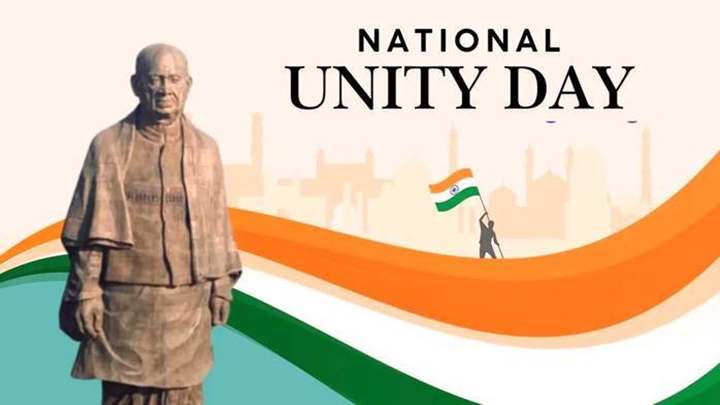
Observed annually on 31 October, Rashtriya Ekta Diwas marks Sardar Vallabhbhai Patel’s birth anniversary. He played a central role in India’s freedom struggle and the integration of princely states after Independence. The Government of India introduced the observance in 2014 to recognise his contribution and reaffirm the country’s commitment to unity, integrity and security. Activities such as the Run for Unity, unity pledges and public programmes bring this message into public life.
The observance is therefore more than a commemorative occasion. It encourages reflection on the foundations of India’s national cohesion and the responsibilities involved in preserving it. At a time when the country is pursuing ambitious economic and technological goals, unity remains an important condition for translating national aspirations into shared progress.
Patel’s Achievement and the Foundations of the Union
The circumstances of 1947 made political integration an urgent priority. Independence ended British rule, but hundreds of princely states had to determine their relationship with the emerging Union. Their integration was essential to building a functioning country rather than a fragmented political landscape.
As India’s first Deputy Prime Minister and Home Minister, Sardar Patel played a leading role in this process, working closely with V. P. Menon and other officials. Negotiation and political persuasion secured the accession of most states, although some cases required more complex measures. The achievement involved many individuals and institutions, but Patel’s determination and political judgement were central to the outcome.
His contribution established an enduring principle: national unity requires political leadership capable of reconciling different interests within a common framework. Contemporary India faces a different set of circumstances, but the need to balance diversity with collective purpose remains relevant.
The New Challenge: Unity Through Development
India’s contemporary challenge is not the integration of princely states, but ensuring that rapid national development translates into a sense of shared progress. Major infrastructure projects, improved transport links, digital connectivity and expanding economic opportunities can connect distant regions more closely to national markets and institutions. Connectivity projects in border areas and the Northeast, for example, have implications not only for mobility and security but also for access to services and economic participation.
However, development alone cannot guarantee cohesion. Regional differences in employment, education, public services and investment can shape how citizens experience the Union. A credible national vision must therefore combine economic ambition with attention to local needs. When people see tangible improvements in their lives and have confidence in public institutions, the idea of belonging to a common national project becomes more meaningful.
This is where cooperative federalism matters. India’s scale and diversity require coordination between the Union and state governments on infrastructure, industry, education, public health and internal security. Political differences are inevitable in a democracy; the important question is whether institutions can manage them constructively. National unity is strengthened when governments work together while respecting constitutional responsibilities and legitimate regional aspirations.
Diversity, Social Trust and the Next Generation
India’s strength lies partly in its ability to accommodate multiple languages, cultures, traditions and regional identities. National cohesion does not require these differences to disappear. Instead, it depends on citizens recognising that their identities can coexist within a shared constitutional and political framework.
That principle has contemporary significance in an era of rapid digital communication, when public debate can connect communities but can also intensify mistrust and polarisation. Social cohesion cannot be maintained through official messages alone. It requires responsible public discourse, equal respect for citizens and confidence that disagreements can be expressed and resolved through democratic institutions.
Young Indians have a particularly important role in this process. Educational exchanges, cultural programmes, inter-state travel and opportunities to learn about different parts of the country can build familiarity beyond regional boundaries. The Ek Bharat Shreshtha Bharat initiative, announced in 2015, seeks to promote mutual understanding and cultural exchange between states and Union Territories. Such initiatives can help make national integration a lived experience rather than an abstract ideal.
Unity as an Ongoing National Responsibility
Ekta Diwas also highlights the relationship between security and inclusion. Protecting territorial integrity and maintaining public order are essential responsibilities of the state, but lasting stability also depends on addressing the circumstances that leave communities isolated or dissatisfied. Development, access to public services and meaningful participation can reinforce the foundations of peace.
Patel’s legacy should therefore be understood in both historical and contemporary terms. He helped establish the political foundations of a united India; the present generation must ensure that the Union remains cohesive through democratic institutions, inclusive development and mutual respect.
The measure of national unity is not whether every citizen thinks alike, but whether people with different identities and interests can share a common future. As India seeks a greater global role and pursues its development ambitions, this distinction becomes increasingly important. Rashtriya Ekta Diwas serves as a reminder that unity is not a finished achievement inherited from the past. It is a continuing national responsibility, renewed through the everyday experience of citizenship.
