

JK News Today
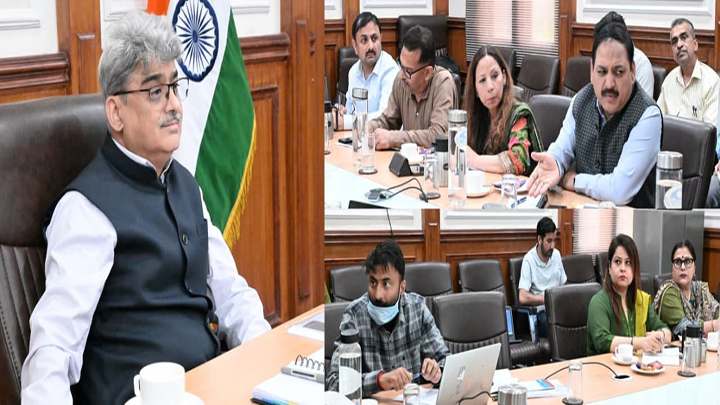
JAMMU, APRIL 16: Chief Secretary, Atal Dulloo today convened a meeting to assess the implementation status of the Prime Minister’s Internship Scheme (PMIS) in Jammu and Kashmir and outlined a comprehensive strategy to enhance its outreach and impact across the Union Territory.
Those who attended this meeting includes Commissioner Secretary, School Education Department; Secretary, Employment and Skill Development Departments; MD, Skill Development Mission along with other concerned officers.
Director, PMIS in Ministry of Corporate Affairs, GoI attended the meeting through video link.
The Chief Secretary underscored the importance of the scheme in improving youth employability by providing structured internship opportunities in reputed companies. He noted that PMIS, launched under the Union Budget 2024–25, offers internships of 6 to 9 months with a monthly stipend of ₹9,000 and an additional one-time grant of ₹6,000, thereby enabling young individuals to gain valuable industry exposure.
Reviewing the progress, it was informed that Jammu and Kashmir has witnessed encouraging response in terms of registrations, with over 4,400 youth registered on the portal and more than 2,800 profiles completed so far. However, only 68 internship opportunities are currently available in the UT, despite J&K ranking among the top states in registrations.
The Chief Secretary took this occasion to impress upon the concerned to bridge the gap between registrations and available opportunities, he also emphasized the need for aggressive industry engagement with the active role of the Ministry in doing the same for J&K. He observed that increasing participation of companies is crucial to ensuring that the registered youth are meaningfully absorbed under the scheme.
The Chief Secretary directed the department to significantly scale up registration efforts and set an ambitious target of achieving at least 2 lakh registrations from across the districts of Jammu and Kashmir. He emphasized that this can be achieved through a mission-mode approach involving educational institutions, employment centres, and grassroots-level outreach mechanisms.
Highlighting the constraints posed by the limited presence of large corporate houses in the UT, he stressed the need to scale up internship opportunities multifold for the youth across the States/UTs of the country. He called for proactive engagement with the Ministry of Corporate Affairs to enhance the number of internship opportunities to at least 1,000 in the coming days, so as to bridge the existing gap between demand and availability.
The Chief Secretary directed that PMIS registration be integrated with institutional mechanisms, including ITIs, polytechnics, and colleges, to ensure maximum coverage of eligible youth. He also called for active involvement of District Employment & Counselling Centres, Common Service Centres, and placement cells in facilitating registrations.
The Secretary, SDD, Kumar Rajeev Ranjan apprised the meeting of a 100-day roadmap aimed at significantly scaling up registrations and improving outcomes. The plan targets 20,000 registrations in the initial phase, with a structured approach involving campus drives, establishment of help desks, mass awareness campaigns, and deployment of mobile registration units in remote areas.
A key focus of the strategy, he revealed, pivots on the convergence with Mission YUVA to leverage its extensive youth database and grassroots network. He further divulged that over 4.73 lakh “willing to work” youth have already been identified under Mission YUVA, and around 2,000 YUVA Doots will be mobilized to carry out door-to-door awareness and registration drives across all districts.
Stressing the need for effective monitoring, he instructed departments to conduct regular reviews and ensure real-time tracking of progress through digital platforms. He further directed that bottlenecks, if any, be promptly escalated for timely resolution.
Highlighting the transformative potential of the scheme, the Chief Secretary said that PMIS can play a pivotal role in bridging the gap between education and employment and in preparing the youth of Jammu and Kashmir for the demands of the modern job market.