


JK News Today
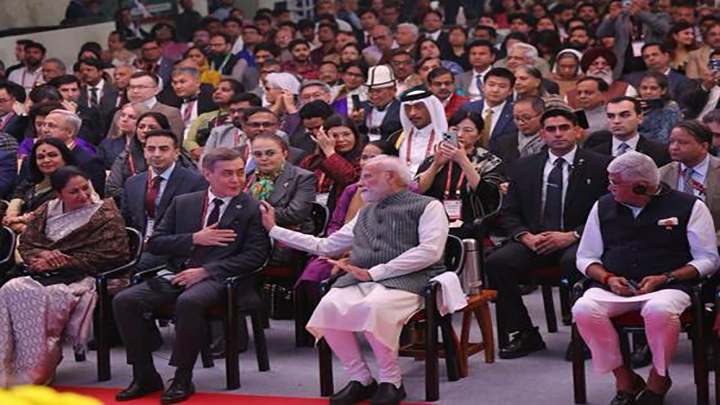
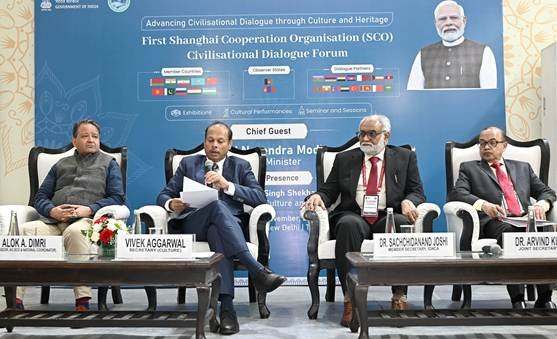
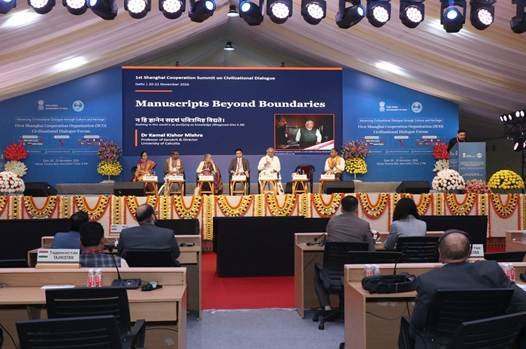
Member States and Dialogue Partners of the Shanghai Cooperation Organisation (SCO), assembled at ‘Purana Qila’ in New Delhi for the First SCO Civilisational Dialogue Forum, having held harmonious, constructive and meaningful deliberations:

Member States and Dialogue Partners expressed their sincere appreciation to the Government of India, and to the Prime Minister, Shri Narendra Modi, for the initiative and the inaugural remarks. They recognised SCO Civilisational Dialogue Forum as an important platform to forge mutual understanding and exchange of ideas among the diverse SCO civilisational traditions;
Cognizant that, the societies of the SCO countries having been shaped by centuries of interaction, exchange of ideas, movement of people, and sharing of knowledge, while preserving their distinct identities, cultures, traditions and beliefs;
Recognising the value of nurturing historical-ties through continual engagement, they reaffirmed their collective commitment, founded on mutual trust, harmony, equality, consultation, and respect for civilisational diversity and pursuit of sustainable development;
Guided by these principles, culture was recognised as a vital bridge of friendship and good-neighbourliness among the nations, and an important dimension of cooperation envisaged under the SCO Charter;
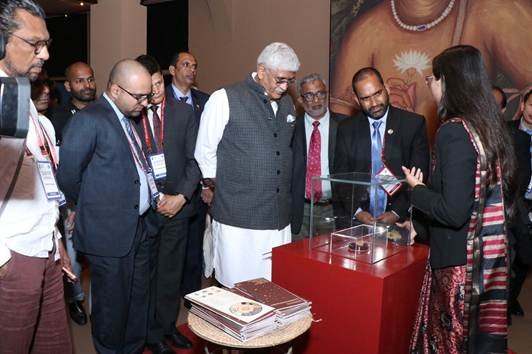
It was recognised that cultural heritage encompasses monuments, manuscripts, literature, works of art, living-traditions, cuisine, performing arts, creative endeavours and knowledge-systems passed on through generations;
It was acknowledged the vital role of cultures, communities, artists, traditional knowledge bearers and younger generations in preserving, sustaining, and carrying forward our civilisational heritage and consciousness.
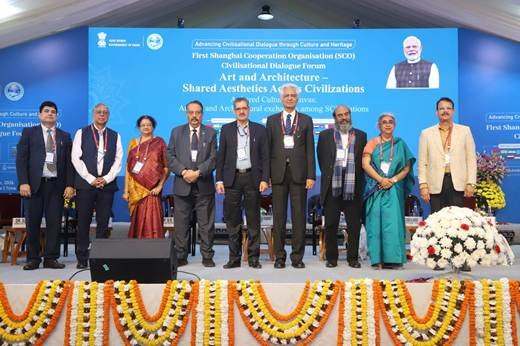
In this spirit, following affirmations were made:
a. Respect for Every Civilisation: Respect every civilisation as an equal voice, and acknowledge its identity and contribution to humanity.
b. Diversity as Strength: Celebrate diversity as a strength, believing in the spirit of “Vasudhaiva Kutumbakam” – that the world is one family.
c. Shared Legacies: Recognise our shared legacies in architecture, historical sites, material culture, traditional knowledge, music, cuisine and textiles and to evolve SCO mechanism for collaborative projects and exhibitions.
d. Joint Nominations for UNESCO: Identify common and shared Tangible, Intangible cultural-heritage and documentary-heritage, and submit joint nominations to be inscribed in respective UNESCO Conventions and Programmes.
e. Languages, Literature and Manuscripts: Value languages, literature, scripts, manuscripts, folk and oral-traditions as records of our intellectual and cultural histories, and welcome cooperation in their digitisation, cataloguing, preservation, joint-studies, translations, and a digital repository was proposed.
f. Technology and Heritage: Embrace technology, including constructive use of Artificial Intelligence, to support the understanding and accessibility of cultural heritage, while respecting its accuracy, context, and the interests of the communities and institutions concerned.
g. Institutional Collaboration: Strengthen institutional collaborations among museums, libraries, archives, universities, research organisations and heritage institutions through professional and scholarly exchange, joint research on shared histories, and capacity-building and training in conservation, documentation and presentation, and creating a platform for collaboration between cultural institutions of SCO Countries.
h. People-to-People Ties: Nurture people-to-people ties through voluntary cooperation, including through joint-exhibitions and collaborations by museums and cultural institutions, cultural festivals, film and performing-arts, exchanges of artists, scholars and students, thereby fostering mutual understanding, shared learning and greater appreciation of respective cultures and traditions.
i. Spiritual and Philosophical Traditions: Honour spiritual and philosophical traditions, places of learning and pilgrimage, and the people associated with them, encouraging respectful dialogue with due regard for diversity of beliefs and practices.
j. Protection of Heritage: Protect heritage from threats, including illicit trafficking in cultural property, environmental pressures, natural calamities through shared experience and cooperation, and explore creation of a platform for resilience against climatic tragedies.
k. Good Practices: Share good practices in preservation, cultural education and public engagement, drawing on existing bilateral, regional and multilateral arrangements, subject to national procedures, priorities, and available resources.
l. Inspiring the Youth: Inspire the youth, as the flagbearers of shared Civilisational and Cultural Heritage.
Proposal of India: India proposed that the SCO Civilisational Dialogue should meet once every two years at a place to be decided by the SCO Member States at respective SCO Summits.
