


JK News Today
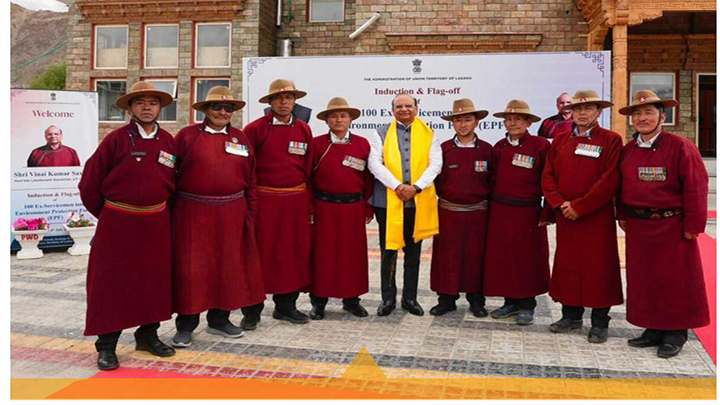
The establishment of the Environment Protection Force (EPF) in Ladakh marks a landmark moment in the Union Territory’s journey towards sustainable development and environmental stewardship. This visionary initiative led by the Hon’ble Lieutenant Governor of Ladakh deserves sincere appreciation for recognizing that the fragile Himalayan ecosystem must be protected with the same seriousness and commitment as the nation’s borders. The induction of 100 ex-servicemen into this dedicated force is more than just an administrative initiative—it is a powerful declaration that Ladakh’s natural heritage is priceless and must be safeguarded for future generations.

For decades, the brave soldiers of Ladakh safeguarded India’s frontiers under some of the harshest conditions on Earth. Today, these veterans have once again answered the call of duty—this time to defend the glaciers, rivers, mountains, wildlife, and pristine landscapes that define Ladakh’s unique identity. Their discipline, dedication, and deep understanding of the region make them ideal custodians of one of the world’s most fragile ecosystems.
As tourism continues to grow, Ladakh has witnessed increasing environmental challenges, including littering, illegal off-roading, damage to alpine meadows, and pressure on sensitive wildlife habitats. The Environment Protection Force is therefore not merely an enforcement agency but a symbol of responsible governance that places environmental conservation at the heart of Ladakh’s future.
This initiative should serve as a wake-up call and a source of inspiration for the youth of Ladakh. While employment remains an important aspiration, equally important is the responsibility of becoming guardians of the land that has nurtured generations. Young people can contribute by participating in plantation drives, promoting responsible tourism, reducing plastic waste, protecting water sources, and volunteering for environmental campaigns in their villages and towns.
The vision aligns beautifully with the nationwide movement launched by Prime Minister Narendra Modi under the “Ek Ped Maa Ke Naam” campaign. The initiative encourages every citizen to plant a tree in honour of their mother, transforming environmental conservation into a deeply personal and emotional commitment. Ladakh’s youth should embrace this spirit wholeheartedly by planting native species, protecting existing green cover, and ensuring that every sapling becomes a living legacy for future generations.
Environmental conservation in Ladakh cannot rely solely on government agencies. It requires the collective participation of monasteries, schools, village communities, social organisations, entrepreneurs, tourism stakeholders, and every household. The Environment Protection Force provides a strong institutional framework, but its success will ultimately depend on public cooperation and awareness.
Ladakh has always been known for its harmony between humanity and nature. Its ancient Buddhist philosophy teaches compassion not only towards people but towards every living being and the environment itself. Preserving this ecological heritage is not simply an environmental obligation—it is a cultural and moral responsibility.
The creation of the Environment Protection Force deserves widespread appreciation. It is a forward-looking initiative that protects Ladakh’s natural wealth while offering ex-servicemen an opportunity to continue serving society. If complemented by active participation from the youth and inspired by campaigns such as “Ek Ped Maa Ke Naam,” this initiative can become a model for mountain regions across India and the world.
The future of Ladakh will not be determined solely by infrastructure or tourism, but by how successfully its people preserve the glaciers, forests, rivers, wildlife, and landscapes that make the region truly extraordinary. The Environment Protection Force is a decisive step in that direction, and one that deserves the wholehearted support of every Ladakhi.
