


International relations and strategic affairs expertinternational affairs expert
JK News Today Analysis
No matter what nomenclature has been given to the US and Iran Memorandum of Understanding that the two nations signed Thursday morning ( IST) , the 14-point document carries the bold imprint of India’s insistence that all issues should be resolved through dialogue and diplomacy. More importantly , both the US and Iran have agreed to “ respect each other’s sovereignty and territorial integrity”. That’s what India has all along been telling the countries involved in the West Asian conflict since February 2026,
At this stage, however, India’s task is far from over. It has to persist and use its good offices to ensure that peace is restored . It is time for its diplomatic voice to resonate more loudly all across the world . India will have to come out of the curtains in open , demonstrating that will deliver peace to the conflict-ridden countries and surrounding regions .
Through its insistence on the core value of treating the world as one family—rooted in its centuries-old heritage and culture—and Prime Minister Narendra Modi’s repeated calls to nations that ‘today’s era is not an era of war,’ India has provided a blueprint. It laid out these guidelines during conversations with world leaders, particularly those whose countries were involved in the conflict
There was relentless consistency in India’s stand that the sovereignty and territorial integrity of countries should be respected at all costs. This stand was articulated several times during the West Asian conflict, and a brief look back will reveal that India had maintained this position even when the Russia-Ukraine conflict broke out in February 2022.
Three major points that Delhi has made during the conflict initiated by the American and Israeli strikes against Iran on February 28- which killed its supreme leader, Ayatollah Ali Khamenei , and several others- were : ( a) escalation should be averted , and issues should be resolved through dialogue and diplomacy ; ( b) maritime navigation should be kept out of the parameters of the conflict, particularly the Strait of Hormuz; and ( c ) there should be complete respect for each other’s sovereignty and territorial integrity.
All these three Indian points have come to fore in the 14-point MoU signed by the two countries..
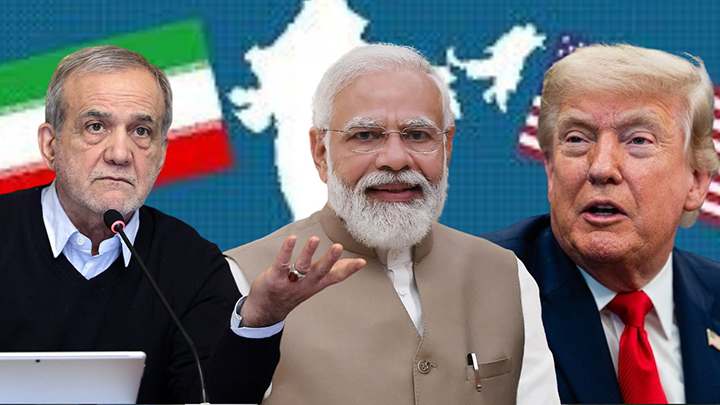
During his meeting with Donald Trump on the side-lines of the G7 summit in Evian-les-Bains, France, Prime Minister Modi commended the US President for his efforts in ending the West Asia conflict and restoring peace. Modi underlined the “importance of maintaining freedom of navigation and unimpeded commerce in the Strait of Hormuz and the need to ensure the safety of the seafarers.” This reaffirmed the stance Modi had articulated when Trump phoned him on March 24, 2026, as the war peaked in the region. At that time, the Prime Minister told Trump that India favored “de-escalation and restoration of peace at the earliest,” emphasizing the need to “ensure that the Strait of Hormuz remains open, secure, and accessible for the whole world.
This was the same point the Prime Minister had made when he called Iranian President Masoud Pezeshkian on March 12, 2026. He had expressed concern about the evolving situation in the region (at that time, West Asia was experiencing an extremely dangerous situation, as Iran was under intense assault by the US and Israel, while Iran had started targeting the Gulf States, damaging their infrastructure). He also reiterated India’s consistent position that all issues must be resolved through dialogue and diplomacy.
India was concerned about the situation because it threatened world peace and stability, besides causing a massive energy crisis. The closure and subsequent blockade of the Strait of Hormuz—through which at least 20 per cent of the world’s oil and gas supplies pass—hit countries globally. India too suffered on this front. Oil and gas prices went up as upheavals intensified in and around the critical waterways.
For India, the situation was particularly worrying as its ships were hit by flying missiles, resulting in three Indian sailors being killed and many more requiring rescue. Furthermore, more than 10 million Indian citizens and workers were in the Gulf States.
Now, after the signing of the MoU between Iran and the US , efforts are underway to work on this understanding. There is a 60-day window for things to firm up into a real-time peace deal. It is incumbent upon Delhi to keep guiding the countries involved in the process to restore peace in the world . It is time for India to be proactive . The situation has changed . The world knows that Indian values can help find a lasting solution . It needs to do all this for all its citizens in the country and all those in the Gulf States . More than that , it is important for India to guide the course of events so that conflict doesn’t erupt again.