



Editor JK News Today
Comment
Two core fundamentals must be understood regarding Ladakh, one of the most sensitive territories in the country. First, its unique geography and topography place it as a geo-strategic and geopolitical linchpin for India. Second, the region is currently asking New Delhi for more than what it already received when its long-pending demand for Union Territory (UT) status was met by the Central Government in August 2019.
While there is no disagreement on Ladakh’s strategic importance, this second reality has assumed critical significance at this juncture. The two aspects cannot be viewed in isolation; they are deeply intertwined, presenting both a distinct advantage and disadvantage.
A broader perspective is required to understand the contemporary aspirations of Ladakh’s population and to evaluate what the Centre can realistically deliver given the volatile geopolitical atmosphere in India’s immediate and distant neighborhood. The people of Ladakh have every right to voice their concerns and offer solutions. In many ways, those who live there understand what is critical for the region far better than distant policymakers. Over generations, locals have learned every inch of this difficult terrain and know how to protect it. They have historically stood on the frontlines alongside the Indian Army, defending borders against both China and Pakistan.
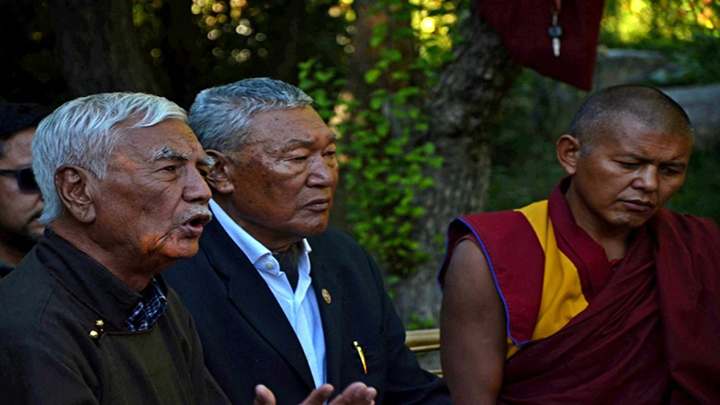
As the Ministry of Home Affairs engages in talks with Ladakh’s leadership—represented primarily by the Leh Apex Body (LAB), the Kargil Democratic Alliance (KDA), and other respected leaders—two critical questions must be weighed:
How closely do these leadership demands align with the actual aspirations of the masses?
Can these demands be realistically accepted, and if so, what are the broader consequences for the region and the nation?
Alongside these questions, stakeholders must assess the tangible opportunities these negotiations will bring for the youth, while remaining vigilant against the pitfalls that vested interests will undoubtedly exploit.
The tragic incidents of September 24, 2025, which resulted in the loss of four precious lives and left dozens injured, serve as a stark warning. Those events inflicted lifetime scars on the psyche of a historically peaceful and beautiful region. A diabolical agenda, deceptively marketed as a genuine public agitation, was at work, leaving locals wondering how such violence could pierce their homeland.
This tragedy must serve as a lesson before leadership talks about what to demand and what Delhi is willing to concede. A cult of personality must not subvert the genuine issues of the people. The violence of September 2025 did more than bruise the land; it pushed back months, if not years, of delicate negotiations. It exposed deep vulnerabilities. Furthermore, this instability did not remain confined within India’s borders. It was watched closely by external adversaries and interpreted as a weakness to exploit.
Neither China nor Pakistan will look the other way. Regardless of the diplomatic status or ongoing border negotiations with China, Ladakh remains central to Beijing’s strategic calculus. The granting of UT status to Ladakh in 2019 deeply rattled Beijing for three reasons:
Elimination of Ambiguity: India effectively stripped away the “disputed” tag over the territory, leaving no room for China’s all-weather ally, Pakistan, to raise the issue with its historical ferocity.
Assertive Indian Standpoint: Beijing was confronted with a firm, unambiguous Indian stance on Ladakh.
CPEC Vulnerability: China felt a direct strategic threat to the China-Pakistan Economic Corridor (CPEC), which cuts through illegally occupied territories of the former state of Jammu and Kashmir.
Pakistan, driven by its innate obsession with Jammu, Kashmir, and Ladakh, felt similarly frustrated by the altered status quo. It lost the ground it had been relying on at international forums—whether advocating for UN resolutions or seeking third-party mediation. Today, Islamabad’s diplomatic, military, and propaganda offensives have largely collapsed. Ironically, Pakistan is now facing domestic unrest, with people in its occupied territories—including Gilgit-Baltistan—protesting and demanding a return to Indian sovereignty.
If India’s two nuclear adversaries sense an opportunity to exploit internal rifts in Ladakh, the strategic threat to the country will intensify, and the local population will bear the brunt of the fallout. The region has already witnessed a grueling military standoff triggered by China from April 2020 to October 2024.
Therefore, it is in the vital interest of Ladakh that the leaders negotiating with the Home Ministry go back to the drawing board. They must redraw their lines based on what is practically achievable in terms of protecting their land, culture, traditions, environment, and political empowerment. Rigidity and a flawed reading of the geopolitical landscape will yield dangerous consequences.
Ladakh spans an area of over 59,000 square kilometers with a population of just over 3.5 lakh people. Yet, it shares active borders with China and Pakistan, and hosts a vital strategic asset: the Siachen Glacier.
A lesson must be drawn from the history of Jammu and Kashmir, where decades of unwarranted political maneuvering compromised national security. Ladakh itself witnessed the horrors of state-sponsored terror when Pakistani forces intruded into the Himalayan heights of Kargil. The nation had to make immense sacrifices to reclaim what was captured.
History must neither be forgotten nor ignored. For the security and prosperity of this vital frontier, New Delhi and the Ladakh leadership must urgently find themselves on the same page.
