



International Affairs expert
JK News Today Commentary
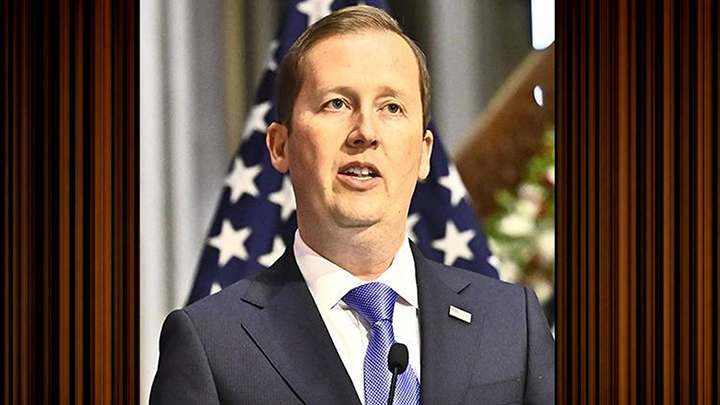
The U.S. Ambassador to India, Sergio Gor, is visiting Kashmir today, Wednesday, August 19, 2026. This visit is highly significant—apart from being his first trip to the Valley and subsequently to the Union Territory (UT) of Ladakh—because the timing is critical. Even more important than the visit itself is what he will say and report to both Foggy Bottom and the White House. America has always taken a very keen interest in Kashmir, and therefore the U.S. envoy’s visit to the region should not come as a surprise.

There are certain narratives and optics in present-day Kashmir that are known all over the world. The US Embassy’s political section monitors them through newspapers, TV channels, and social media posts. However, whenever US envoys visit the Valley—which has battled Pakistan-sponsored terrorism for over three decades—they seek to go deeper into the minds of the people. This has been a pattern, and Gor’s visit is not going to be any different. He is aware of the importance of the timing of his visit, as well as the narratives often broadcast by local and national leaders. There is, of course, both distance and difference in their perceptions. It is good that Chief Minister Omar Abdullah has already made it clear that he will listen to the visiting envoy and discuss the situation, but he will not air his grievances to others, as the solution to J&K’s internal issues lies with Delhi Delhi alone.
There are certain narratives and optics in the current-day Kashmir , and those are known to all over the world. The US embassy’s political section monitors it through newspapers, TV channels and social media posts , but whenever the US envoys visit the Valley which has battled Pakistan sponsored terrorism for over three decades , they seek to go deeper into the mind of the people . This has been a pattern. Gor’s visit is not going to be any different .He is aware of the importance of the timing of his visit as also the narratives often broadcast by the leaders – locals and nationals , and there , of course is both distance and difference in their perceptions . It is good that Chief Minister Omar Abdullah has already made it clear that , he would listen to the visiting envoy, discuss the situation , but would not complain about his grievances to others , as the solution of J&K’s internal issues lies with Delhi, and Delhi alone.
The stark reality is that U.S. diplomats and others are never confronted with “ifs and buts” in this territory, as it is widely understood that the region is open to all. Gor is visiting as Jammu & Kashmir (J&K) and Ladakh complete seven years as Union Territories. The symbols of parallel autonomy—a separate constitution, a flag, and a powerful legislature—were done away with by the abrogation of Article 370. Though some argue that the provision was not abolished but diluted, the reality is that these special provisions are irreversible, as no party or group of parties would ever dare to tamper with the decisions of August 5, 2019.
The most pertinent issue of all is statehood. The ruling National Conference—which won the 2024 Assembly elections with a popular vote and formed the government—is leading from the front. This is not a post-government-formation stance; it has been their position ever since the state was divided into the two Union Territories of Ladakh and J&K. This remains the only decision of August 5, 2019, left open-ended, given the promises made in Parliament and in the public domain to restore statehood to J&K at an “ appropriate time.”
In today’s context, the U.S. Ambassador’s visit assumes significance as he lands in Srinagar against the backdrop of Kashmir taking center stage in Indo-Pak relations (or the absence thereof) following the Pahalgam massacre of April 22, 2025, and the subsequent launch of Operation Sindoor of May 2025, in which America claims to have played a role in ending a four-day war.
India has categorically denied this claim, while Pakistan continues to hail U.S. President Donald Trump for intervening. India maintains that it agreed to a ceasefire solely at the request of Pakistan, which was hit hard by Indian strikes. India reinforced this point in a recently released documentary on Operation Sindoor, showcasing the strength and power of its armed forces in decimating cross-border terrorism networks. Pakistan, stung by this reality, dismissed the documentary as “Bollywood-style propaganda.”
Primarily, two major issues will catch the attention of the visiting ambassador:
· The rollback of Pakistan-sponsored terrorism, with terrorists and their infrastructure left on life support.
· The delay in restoring statehood, which has hurt governance and wait for the fulfilment of the promise on this count.
While these are the apparent realities the U.S. is aware of, the visitor may also look at how to encourage Delhi and Islamabad to sit across the table and resolve their issues.
India had the chance to be aggressive and assertive in highlighting unfortunate developments across the Line of Control (LoC) in territories under Pakistan’s illegal occupation, but it maintained a steady tone. It criticized Pakistani atrocities against the people of POJK (Pakistan-Occupied Jammu and Kashmir) and sought the international community’s censure of these high-handed actions.
The U.S. has its own geopolitical and geostrategic compulsions. It wants to keep Pakistan on good terms, even though the internal realities of that country are no secret to Washington.
President Donald Trump recently hailed the Mecca Agreement, stating he was “very happy to see that Saudi Arabia, Turkey, and Pakistan have recently, and finally, signed the Mecca Joint Defence Agreement,” and congratulated the “great leadership” of the three nations, calling it “a big, bold, and important first step—wow!”
Ambassador Gor will likely assess the ground situation to see how much the POJK situation has impacted the minds of people in Kashmir. He may also examine how and why the U.S. and Israeli strikes on Iran on February 28—which resulted in a full-fledged regional war—played out on the soil of the Valley, which witnessed massive protests against the attacks on Iran.
In Ladakh, he will likely be interested in understanding the Chinese factor along the Line of Actual Control (LAC).
Ultimately, the most important aspect will be his private and public observations. While we may never know the exact details of what he reports to Washington after his visit, Kashmir remains distinct from every other place he has toured since arriving in India as the U.S. envoy in January of this year.
