


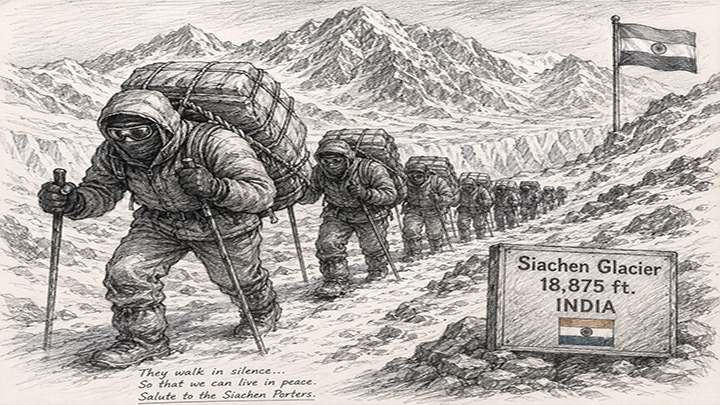

Leh, Ladakh: A chance conversation between a tourist from Delhi and a young Ladakhi driver during a family vacation has shed light on the extraordinary sacrifices made by civilian porters supporting the Indian Army in the world’s highest battlefield — Siachen Glacier.
The tourist, a manager with a multinational company in Delhi, was visiting Ladakh with his family for a week-long holiday when he struck up a conversation with his driver, a 28-year-old Ladakhi resident.

As the tourist season in Ladakh was nearing its end, the visitor asked the young man about his plans for the coming winter.
“Will you travel to Delhi, Goa, or another city to work during the off-season?” the tourist inquired.
The young man replied that he would remain in Ladakh.
“I will go to Siachen,” he said.
Surprised by the answer, the tourist questioned why anyone would choose to work in a place known for its extreme weather conditions.
The young man explained that he works as a civilian porter for the Indian Army on a contractual basis. Along with other porters from the region, he undertakes a long journey to the Siachen Base Camp, where medical examinations determine their fitness for deployment.
Once selected, they are provided specialized clothing and equipment before beginning several months of work in one of the harshest environments on Earth.
According to him, the primary responsibility of porters is to transport essential supplies between military posts situated across the glacier. Due to the difficult terrain and operational constraints, much of the movement is carried out on foot, often in complete darkness and freezing temperatures.
Working at altitudes approaching 18,000 feet and temperatures that can plunge below minus 50 degrees Celsius presents immense physical and mental challenges. Oxygen levels are significantly lower, and carrying even modest loads requires tremendous endurance.
The young porter revealed that many of his colleagues have faced life-threatening situations, including accidents in glacier crevasses and exposure to extreme weather conditions.
Despite the risks, he said the work provides an important source of income for his family, which includes his elderly parents, wife, and two daughters.
More importantly, he expressed pride in contributing to the nation’s security and supporting the soldiers serving on the front lines.
The conversation left a lasting impression on the tourist, who reflected on the contrast between the comfort of urban life and the hardships endured by those working in remote border regions.
The story serves as a reminder of the often-overlooked role played by civilian porters and local support staff who assist the Indian Army in maintaining vital operations in some of the world’s most challenging terrains.
While soldiers rightly receive recognition for their service, the contributions of these civilian workers also form an important part of the logistical backbone that supports India’s presence in high-altitude border areas.
Their dedication, resilience, and willingness to work under extreme conditions stand as a testament to the spirit of service and sacrifice that helps sustain life and security in one of the most demanding environments on the planet.
