


Microplastics Found in Ujh and Chenab Rivers, Raising Concerns Over Freshwater Pollution
JK News Today
Jammu, 02 Sept 2026: Researchers from the Department of Environmental Sciences, Central University of Jammu (CU Jammu) have reported widespread microplastic contamination in the Ujh River in Kathua and the Chenab River in Kishtwar, highlighting growing concerns over plastic pollution in the freshwater ecosystems of Jammu and Kashmir.

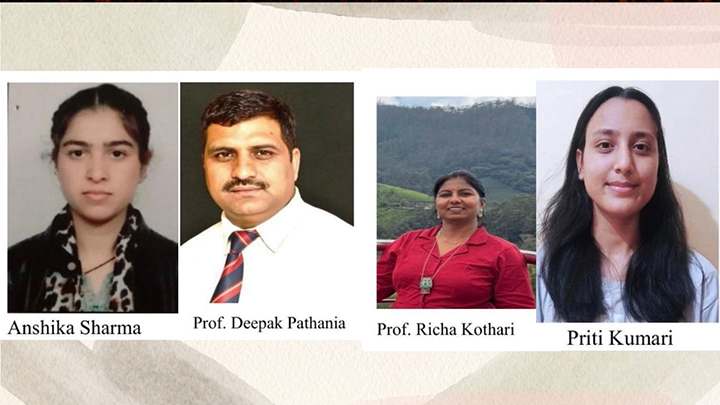
The studies were conducted by Anshika Sharma and Priti Kumari, Post-graduate students under the supervision of Prof. Deepak Pathania and Prof. Richa Kothari of the Department of Environmental Sciences, Central University of Jammu.
The study of the Ujh River detected micro plastics in water, riverbed sediment and fish tissues, indicating that plastic contamination is distributed across multiple components of the aquatic ecosystem. Water samples were collected from 10 locations, while sediment and fish samples were analysed from four sites. Microplastics were detected in every sample examined.
The researchers recovered a total of 280 microplastic particles from water samples, with concentrations ranging from 13 to 45 particles per site, while another 75 particles were recorded in sediment samples. Microplastics were also detected in Labeorohita (rohu), including its liver, gills and intestine, demonstrating that plastic particles are not restricted to the aquatic environment but can also enter aquatic organisms.
Interestingly, several major water-quality parameters of the Ujh River, including dissolved oxygen, pH, hardness, alkalinity and sulphate, remained within the prescribed national limits at all sampling sites. However, the distribution of microplastics was not uniform throughout the river. Statistical analysis revealed considerable differences among sampling locations, which the researchers associated with factors such as agricultural runoff, waste dumping and riverside settlements. The most contaminated site was approximately 3.5 times more polluted than the least contaminated site.
The majority of the particles were identified as black microfibres smaller than 0.5 mm, followed by red and transparent particles. Laboratory analysis identified polyethylene, polypropylene and nylon, polymers commonly associated with packaging materials, synthetic textiles and fishing-related materials. The researchers observed that nylon fibres recovered from sediment appeared more weathered, whereas fibres found in water and fish tissues appeared relatively fresher, suggesting the movement and transfer of plastic particles through different components of the aquatic ecosystem.
A separate study of the Chenab River in Kishtwar, conducted under the supervision of Prof. Pathania and Prof. Kothari, also reported microplastic contamination in fish. Twenty microplastic particles were detected, with 10 particles in the gastrointestinal tract, six in the gills and four in the liver. Fibres constituted approximately 95–99% of the particles, with blue, black and transparent fibres being predominant. Polyethylene and polypropylene were again identified among the major polymer types. The researchers linked the contamination to potential sources including untreated sewage, municipal waste, surface runoff and wastewater.
The Water Quality Index (WQI) of the Chenab River was categorised as poor, while pollution-load-index values varied among the different fish organs examined, indicating differences in microplastic accumulation.
- Ujh River: Microplastics recovered from water and sediment
Total reported particles = 355
Water: 280 (78.9%)
Sediment: 75 (21.1%)
- Chenab River: Microplastics detected in fish organs
Total particles = 20
Gastrointestinal tract: 10 (50%)
Gills: 6 (30%)
Liver: 4 (20%)
Distribution of 20 detected microplastic particles among fish organs.
The detection of microplastics in fish tissues is particularly significant because aquatic organisms can act as a pathway for the transfer of plastic particles through food chains and food webs. As microplastics move from lower to higher trophic levels, they may expose a wider range of organisms to persistent plastic particles and associated contaminants. This emerging issue highlights the need for regular monitoring of freshwater ecosystems and urgent measures to reduce plastic waste entering rivers.
The findings have drawn attention to the potential ecological implications of microplastic pollution in the region’s freshwater systems. Prof. Sanjeev Jain, Hon’ble Vice Chancellor, Central University of Jammu, appreciated Prof. Deepak Pathania and Prof. Richa Kothari for their consistent contributions to environmental research at the university. He emphasised that the detection of microplastics in freshwater systems and fish tissues is a serious environmental concern, particularly because it indicates the potential movement of plastic particles through aquatic organisms and, consequently, the food chain.
The researchers stressed the need for improved wastewater treatment, effective plastic-waste management, prevention of indiscriminate dumping, regular monitoring of rivers and greater public awareness to address the emerging threat of microplastic pollution in Jammu and Kashmir’s freshwater ecosystems.
