


JK News Today
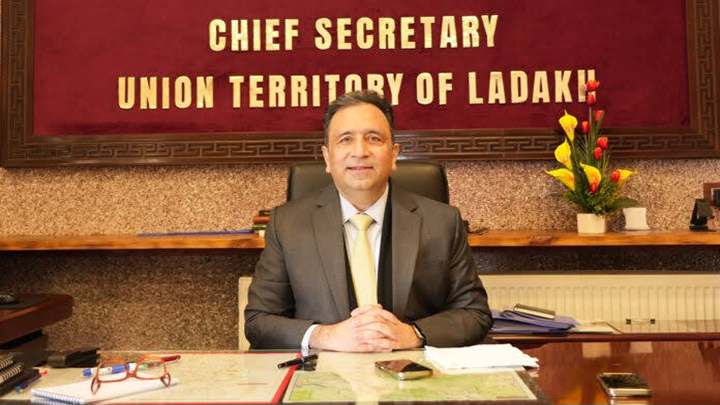
Leh, July 13: In a landmark decision set to redefine grassroots governance in the Union Territory, the Ladakh Administration has announced that Autonomous Hill Development Councils (AHDCs) will be constituted in all seven districts of Ladakh. The move, announced by Chief Secretary Ashish Kundra in Leh, has been hailed as a major step towards democratic decentralisation, balanced regional development and greater local empowerment.

The decision follows the creation of five new districts—Sham, Nubra, Changthang, Drass and Zanskar—earlier this year, expanding Ladakh from two districts to seven. Until now, elected Hill Councils existed only in Leh and Kargil. With this announcement, every district will have its own democratically elected Autonomous Hill Development Council, ensuring equal institutional representation across the Union Territory.
Addressing a press conference, Chief Secretary Ashish Kundra described the decision as “a major step towards democratic decentralisation and grassroots governance.” He explained that Section 3(1) of the LAHDC Act already provides for a council in every district, and that only limited legislative amendments and the delimitation of constituencies remain before the new councils can be constituted.
One of the most significant aspects of the announcement is that the new councils will enjoy the same powers and authority as the existing councils in Leh and Kargil. These include powers relating to land ownership and allotment, district cadre recruitment and promotions, preparation of district development plans, management of health, education, tourism, local infrastructure and social welfare programmes. Each council will also have its own dedicated Council Fund and the authority to levy specified taxes and fees, enabling greater financial autonomy and locally driven development.
The Chief Secretary also revealed that the Government is working on establishing a Union Territory-level elected body under a customised constitutional framework, which would function alongside the seven Hill Councils. According to him, the proposed model would combine legislative, executive, financial and administrative powers while preserving the autonomy of the district councils. The structure and powers of this body will be finalised through consultations between the Government of India and representatives of Ladakh.
The announcement has been widely welcomed across Ladakh, with residents viewing it as the fulfilment of a long-standing demand for equitable representation and decentralised governance. People believe the new councils will ensure that development priorities are determined within each district, allowing faster implementation of projects and more responsive administration in remote and border areas.
With seven Autonomous Hill Development Councils soon expected to function across Leh, Kargil, Sham, Nubra, Changthang, Drass and Zanskar, Ladakh is poised to enter a new chapter of local self-governance—one that promises stronger democratic institutions, enhanced public participation and more balanced development across every region of the Union Territory.
